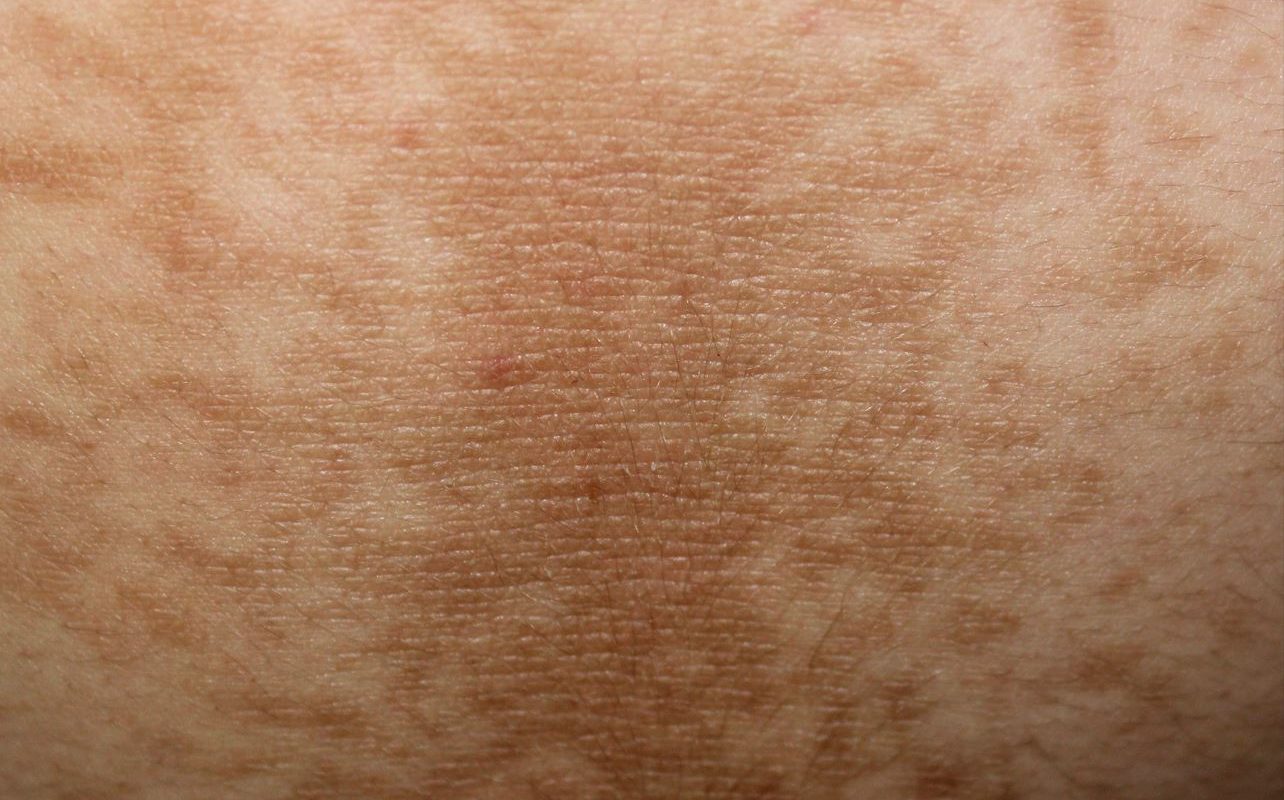
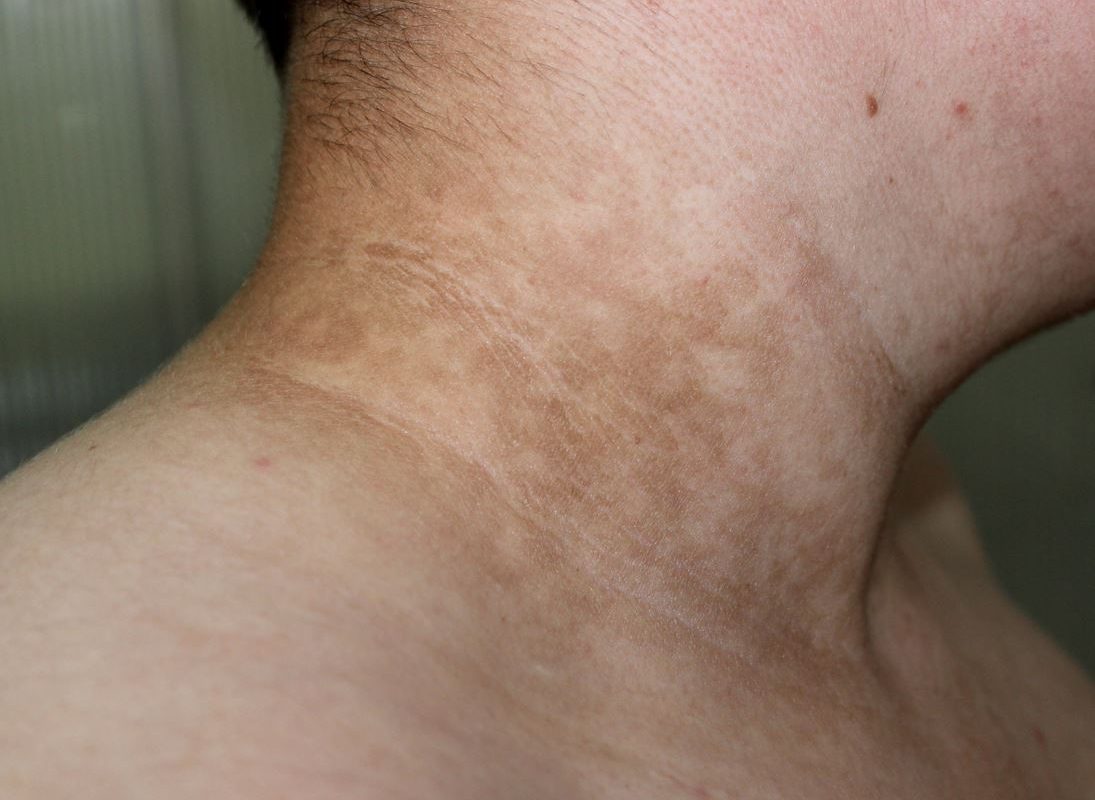
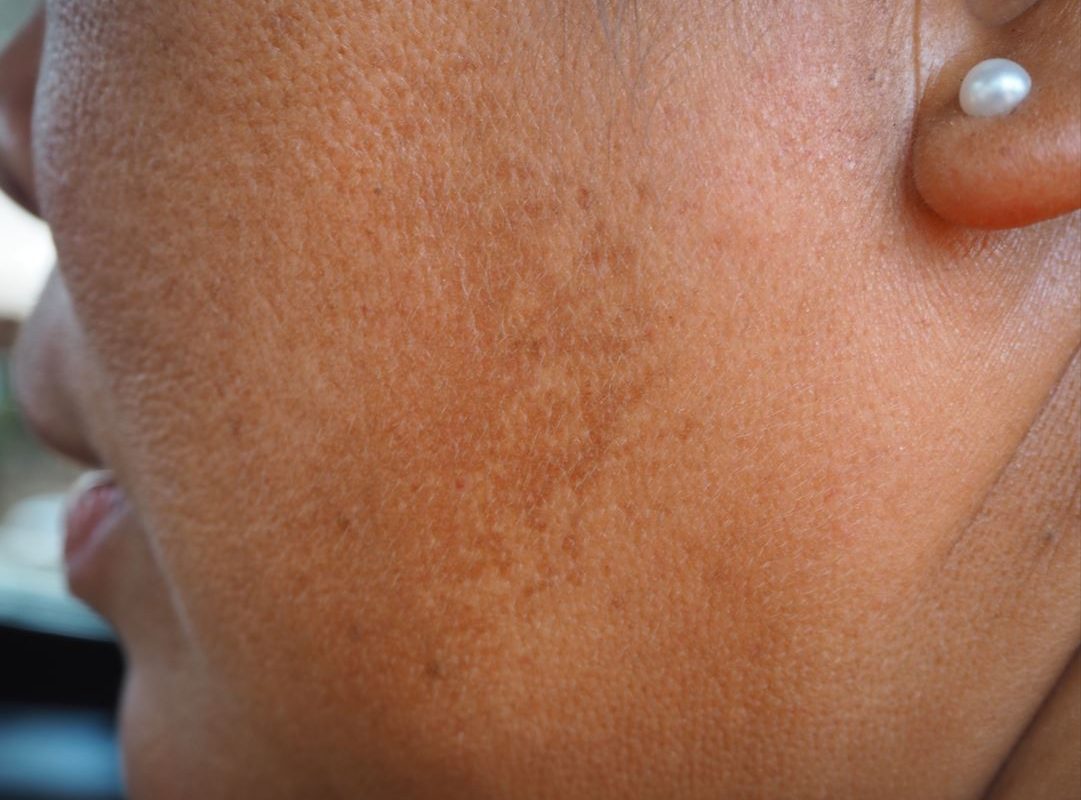
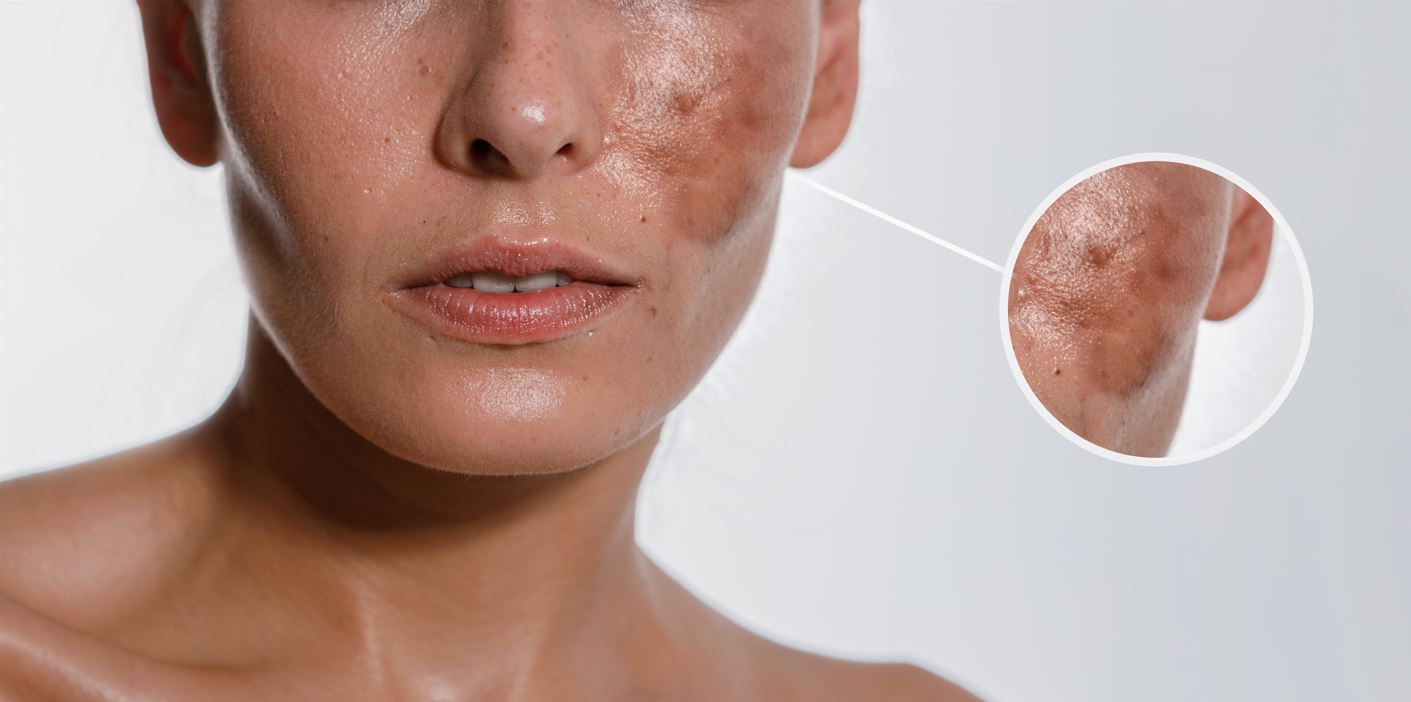
Hyperpigmentation is a phrase that describes darker-looking skin but is usually not a medical problem. It canoccur in isolated areas (patches), cover a wide area, or even the whole body. Although heightened pigmentation is typically not a problem, it may be a sign of another illness. Discover the many forms, causes, and remedies for hyperpigmentation.
Types of Hyperpigmentation
The most prevalent hyperpigmentation kinds are post-inflammatory hyperpigmentation: melasma, and sunspots.
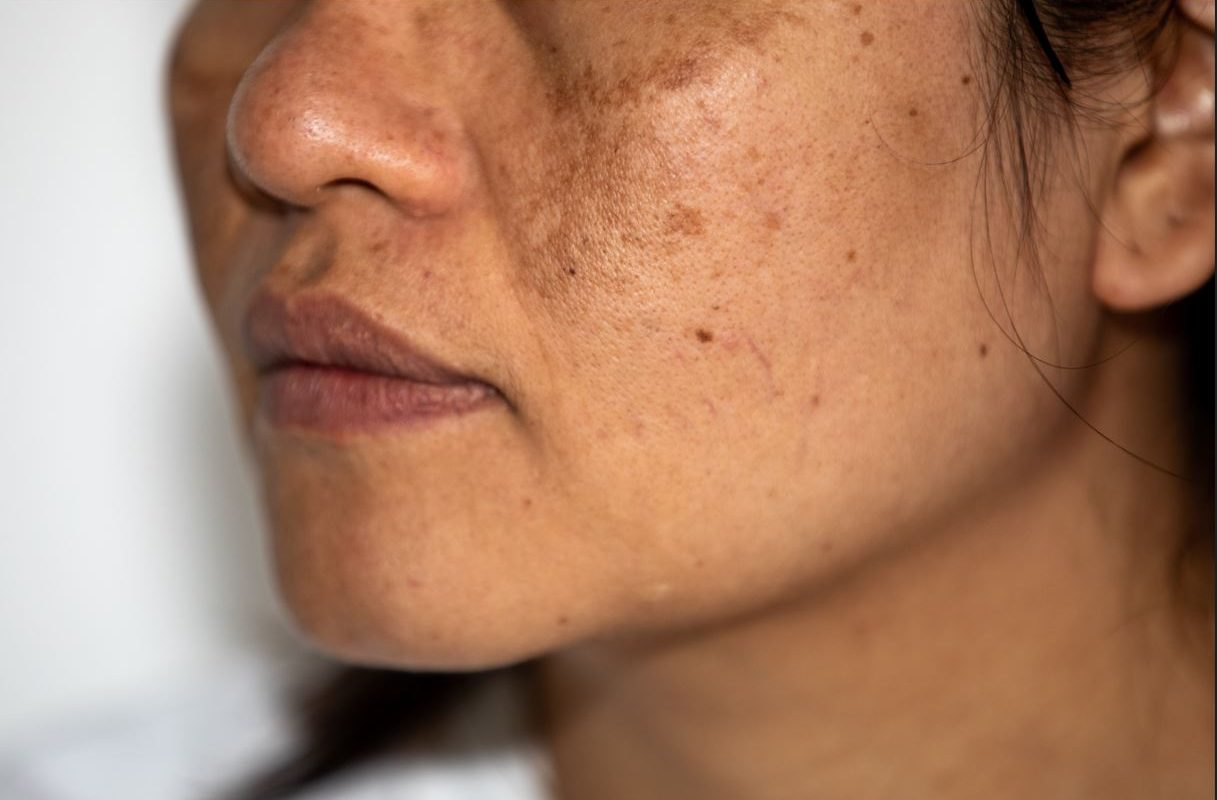
Melasma
Melasma is said to result from hormonal changes which can appear during pregnancy. Hyperpigmented spots can form everywhere on the body, but the face and stomach are where they most frequently occur.
Sunspots
Sunspots, also known as liver spots or solar lentigines, are common and are connected to long-term, excessive solar exposure. They often manifest as patches on exposed skin, such as the hands and cheeks.
Risks
Risk factors for hyperpigmented patches might vary depending on the disorder:
- Hyperpigmentation following inflammation This happens as a result of skin damage or inflammation. Acne is a typical contributor to this kind.
- Pregnancy or oral contraceptive usage, as demonstrated in melasma
- Darker skin types are more vulnerable to changes in pigmentation.
- Medications that make you more sensitive to sunlight
- Damage to the skin, such as a wound or a light burn
- Addison’s disease, a rare endocrine condition
- Increased sun exposure
Why does hyperpigmentation occur?
An excessive amount of melanin is a frequent reason for hyperpigmentation. The pigment melanin is what gives skin its color. Melanocytes, which are skin cells, create it. Your body’s ability to produce melanin can be affected by a number of different diseases or circumstances.
How is hyperpigmentation identified and treated?
A dermatologist can determine what is causing your hyperpigmentation.
They will ask you about your medical history and do a physical examination on you. A skin biopsy may help to identify the reason in some circumstances.
Some hyperpigmentation problems can be treated with topical prescription medicine. The skin-lightening ingredient hydroquinone is typically present in this treatment.
However, continuous, long-term use of topical hydroquinone can result in ochronosis, a darkening of the skin. Therefore, it is advisable to only take topical hydroquinone under the supervision of a dermatologist so that they can properly instruct you on how to use the drug safely.
They will ask you about your medical history and do a physical examination on you. A skin biopsy may help to identify the reason in some circumstances.
Some hyperpigmentation problems can be treated with topical prescription medicine. The skin-lightening ingredient hydroquinone is typically present in this treatment.
However, continuous, long-term use of topical hydroquinone can result in ochronosis, a darkening of the skin. Therefore, it is advisable to only take topical hydroquinone under the supervision of a dermatologist so that they can properly instruct you on how to use the drug safely.
Using Sunscreen to Preventing hyperpigmentation
The single most crucial element in reducing the majority of hyperpigmentation causes is sunscreen.
Search for a sunscreen that blocks physical rays, ideally one that has zinc oxide as its primary active component, a minimum SPF of 30 to 50, with wide range protection. Every day, use sunscreen. If you’re outside in the sun, reapply it every two hours; if you’re swimming, more regularly.
With proper sun protection, dark patches may occasionally disappear on their own. Other times, a more forceful course of action is required. Even with therapy, there is no certainty that the black patches will go entirely.
In most cases, hyperpigmentation is neither dangerous nor a symptom of a major medical issue and should not be treated as such. While sunscreen should be worn for other safety reasons primarily, it does help deal with most cases of hyperpigmentation.
It is important to remember that not everyone is born with an even skin tone, and that is okay.
Search for a sunscreen that blocks physical rays, ideally one that has zinc oxide as its primary active component, a minimum SPF of 30 to 50, with wide range protection. Every day, use sunscreen. If you’re outside in the sun, reapply it every two hours; if you’re swimming, more regularly.
With proper sun protection, dark patches may occasionally disappear on their own. Other times, a more forceful course of action is required. Even with therapy, there is no certainty that the black patches will go entirely.
In most cases, hyperpigmentation is neither dangerous nor a symptom of a major medical issue and should not be treated as such. While sunscreen should be worn for other safety reasons primarily, it does help deal with most cases of hyperpigmentation.
It is important to remember that not everyone is born with an even skin tone, and that is okay.
Disclaimer
BahrainHealthMatters.com is for informative purposes only and not a substitute for professional in person expertise.
We advise that anyone having concerns about their health issues should consult their doctor asap.